People expect technology to just work – whether it’s a phone call that goes through, a car that turns on, or a drone capturing aerial footage of a major event. The bar for performance keeps rising - and the networks behind them have to keep up.
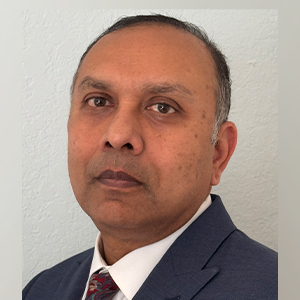
That’s the challenge Velin Kounev is tackling. As an Expert Inventive Scientist at AT&T, he leads work that’s reshaping how wireless networks are modeled, tested, and optimized – all before customers ever experience an issue.
Why it matters
Kounev’s work is more than technical. It’s foundational. With his innovation – the AT&T Geo Modeler – his team is able to better predict connectivity for emerging technologies like autonomous vehicles, drones, and robotics.
It’s the kind of practical, behind-the-scenes advancement guided by a simple belief: when you plan thoughtfully and build with real people in mind, better connectivity can unlock better outcomes.
A new approach
Years before the industry fully recognized the need, Kounev saw that networks were about to become far more complex, and that carriers would need better tools to predict how service behaves in everyday environments.

“People don’t think about the network until something fails, but the future depends on it working everywhere, all the time,” Kounev said. “The Geo Modeler helps us see how the real world will shape coverage before we build, so we can deliver connectivity that’s ready for what’s next.”
The solution he built
Kounev builds for what comes next. From autonomous taxis to drone deliveries, the next decade will demand ultra-reliable connectivity in constantly changing conditions. His team’s work on the AT&T Geo Modeler is designed to help meet that moment, helping predict wireless coverage with speed and accuracy at a scale traditional approaches struggle to match.
The Geo Modeler is an AI-powered simulation tool that helps predict, in near real time, how a wireless network will perform in the real world. Inspired by the video games Kounev played with his family growing up, the virtual model and simulation is "essentially like a giant video game of the United States" that, infused with AI tools, gives engineers a clearer picture of where potential weak spots may appear. Then issues can be addressed earlier and fixes can roll out faster. In essence, it creates virtual models, similar to the way video games are designed and developed.
Matt Harden, VP of Connected Solutions at AT&T, agrees. “The Geo Modeler is a foundational capability for the connected mobility era,” he said. “By marrying advanced geospatial simulation with AI-driven network orchestration, we can deliver predictable, high-performance connectivity that adapts with the environment. Whether it’s a hurricane, a packed stadium, or a city corridor full of autonomous vehicles, we will be prepared.”
The path that led here
Kounev came to the U.S. from Bulgaria as an exchange student, motivated by a desire to learn English and explore the world. He grew up in a family of physicians and was expected to follow that tradition, but his passion for computers and gaming set him on a different course toward a career in research.
As we mark 150 years since the first phone call, efforts like this help ensure what comes next is not only faster, but more dependable.