HTML Editor Component
*Contents may not have visible height

HTML Editor Component
*Contents may not have visible height

HTML Editor Component
*Contents may not have visible height

Latest Updates

July 27, 2026, 2:14 p.m. CT

Our thoughts are with anyone affected by Tropical Storm Bertha. Staying connected is critical and we know this need is even greater before, during, and after any natural disaster.

Overall, our wireless and wireline networks performed well in areas impacted by the storm and are operating normally across all affected regions. Our teams remain focused on supporting customers and communities as any recovery work continues.

We want to thank federal, state, and local officials for their partnership and assistance with helping our recovery efforts. We would also like to express our appreciation and gratitude to the first responders for their service to the communities impacted by this storm.

July 23, 2026, 2:28 p.m. CT

Network Status

Tropical Storm Bertha is bringing gusty winds and rainfall to the coastlines of Louisiana and Texas. Overall, our wireless network is operating normally across these areas, at this time.

Rapid Response

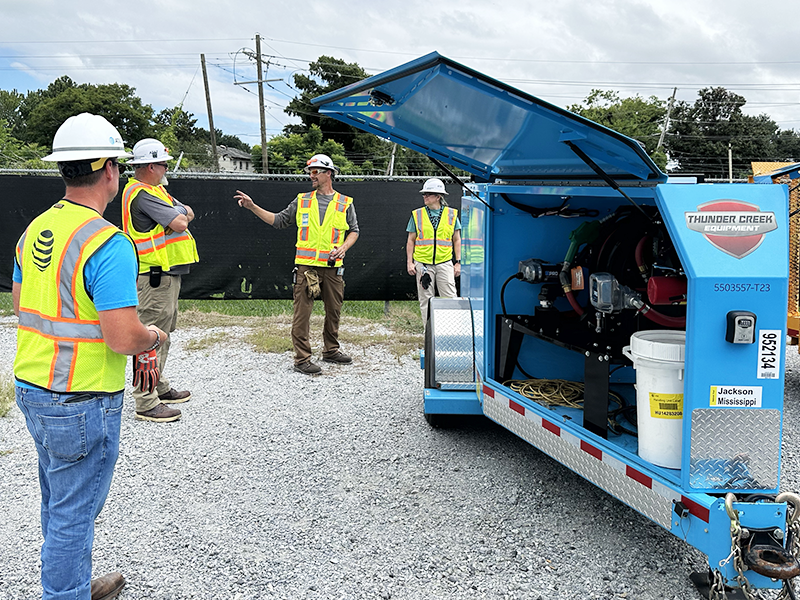
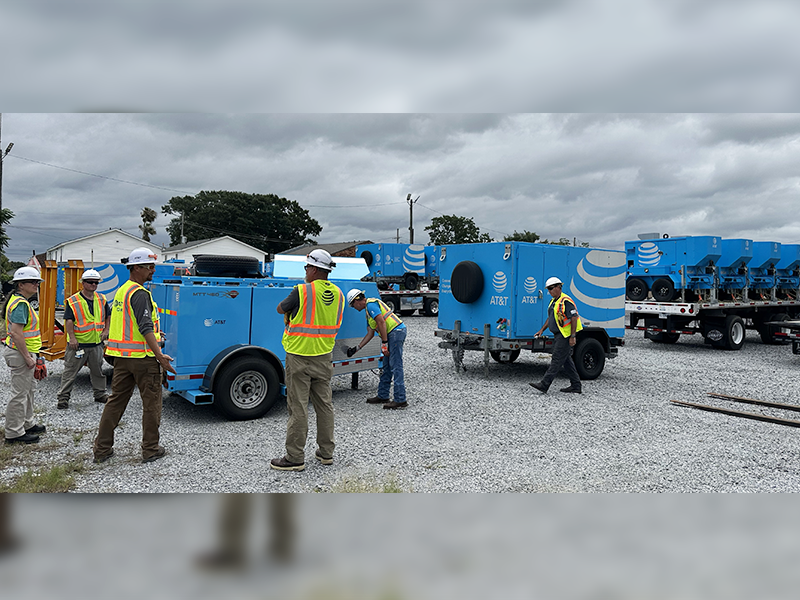
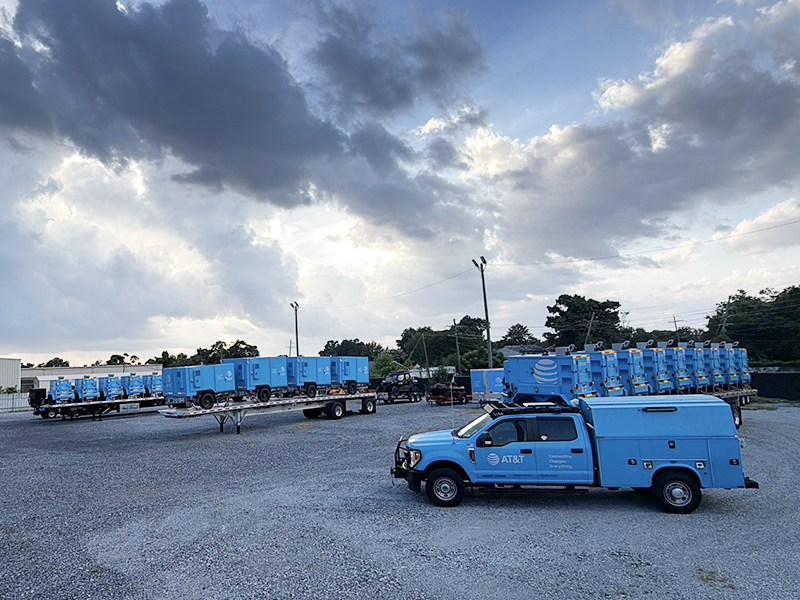
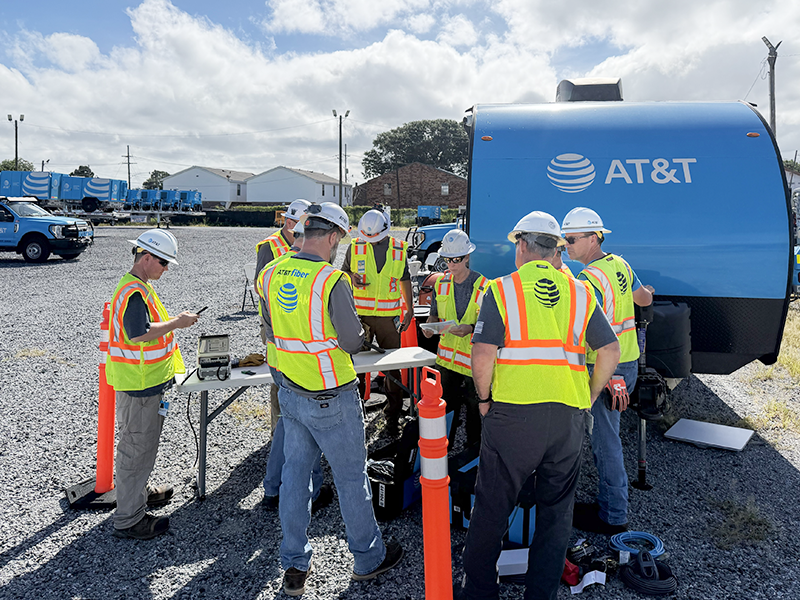
In the days leading up to Bertha, we pre-deployed portable generators, AT&T Network Disaster Recovery (NDR) assets and specialized disaster recovery personnel. The FirstNet Response Operations Group™ (ROG), led by former first responders, stands ready to support emergency communications and deploy backup solutions as needed.

Retail Store Information

Some retail locations may operate with modified hours or temporarily close. Please check online before you make your visit.

Your Connection, Our Priority

We’re closely tracking Bertha’s path and will continue updating this page with the latest details. Our number one priority is helping keep you, your family, and first responders connected.

July 22, 2026, 5:48 p.m. CT

After making landfall this afternoon in southeast Louisiana, Tropical Storm Bertha continues to churn along the Gulf Coast towards Texas.

Our teams have been prepping for high winds, heavy rain and flooding across the area, and we are ready with the industry’s largest and most advanced disaster response program to help keep communications running. We have restoration crews on standby along the Gulf Coast, and our disaster recovery teams are prepared to deploy a fleet of network equipment to affected areas, as soon as it’s safe to do so. 

At this time, our wireless and home phone/internet networks are operating normally in affected areas. As always, we remain focused on helping customers, their families and first responders stay connected when it matters most.

July 22, 2026, 1:55 p.m. CT

Our teams have been busy prepping for Tropical Storm Bertha and are ready to respond. We have restoration crews on standby and our disaster recovery teams are staged and prepared to deploy a fleet of network equipment to affected areas, if needed.

With support of the AT&T Weather Operations Center (AWOC), we’re tracking Bertha’s path and any impacts the storm may bring, including flash flooding and high winds across areas from Florida to Texas.

Our FirstNet liaisons are in contact with federal, state and local officials regarding our deployment efforts to support public safety and the communities in impacted areas. The FirstNet Response Operations Group™ (ROG) is prepared to deploy additional dedicated FirstNet assets at the request of public safety to further support their emergency communications.

We want to remind our customers of the tips on this page so that you can stay connected. We’ll continue to post updates throughout the storm and during any recovery work. Our focus remains on keeping our employees safe and our customers, first responders and communities connected.

July 21, 2026, 11:57 a.m. CT

AT&T Prepares for Tropical Storm Bertha, Shares Tips to Help Customers Stay Connected

Key Takeaways:

  • AT&T teams are preparing for Tropical Storm Bertha in several Gulf Coast states.
  • The AT&T Weather Operations Center is monitoring conditions to help reduce possible impacts to our network, while prioritizing employee safety.
  • The FirstNet Response Operations Group™ (ROG) – led by a dedicated team of former first responders – is working around the clock to support public safety’s emergency communications and has liaisons engaged with local and federal agencies.

As Tropical Storm Bertha moves through the Gulf Coast region, AT&T is preparing to help keep customers, first responders, and communities connected. Our Network teams are completing their preparedness checklists, while the AT&T Weather Operations Center monitors conditions to help reduce possible impacts to our network, while prioritizing employee safety.

Current network preparations include:

  • Deploying and refueling generators at our cell sites and switch facilities in the anticipated impact area.
  • Testing back-up batteries at cell sites.
  • Protecting our physical facilities against flooding.

“Our priority during any disaster is the safety of our employees and keeping first responders, our customers, and communities connected,” said Corey Anthony, SVP – Network Operations, AT&T. “Our disaster recovery teams prepare throughout the year for moments like this and are prepared to deploy network equipment, as needed. We’re also closely linked with public officials in their storm response efforts.”

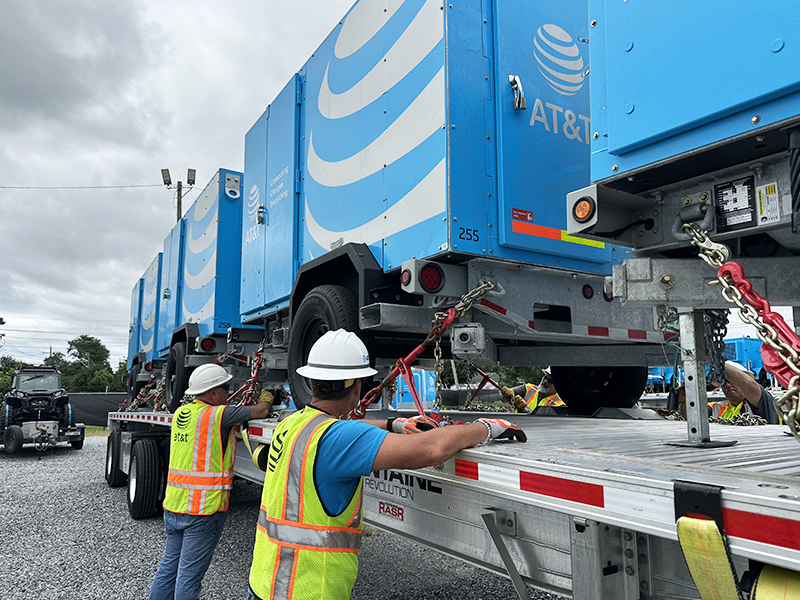
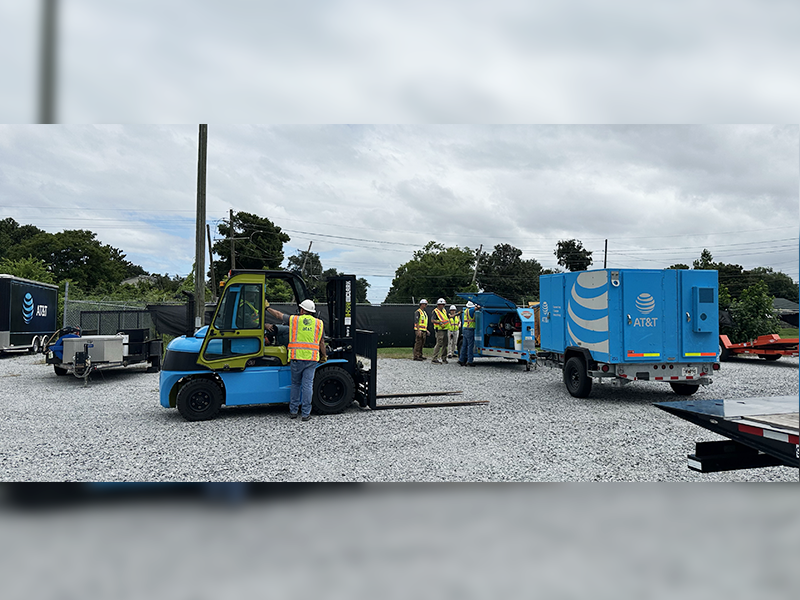
AT&T’s Network Disaster Recovery (NDR) program is the largest in the country. We have more than 750 pieces of specialized response equipment available for quick deployment, including:

  • Mobile cell sites and mobile command centers
  • Flying COWs® (Cell on Wings)
  • Drones for assessing cell site damage
  • Emergency communications vehicles
  • Basecamp operations with sleeping bunks, bathrooms, showers, kitchen, and meals ready-to-eat (MREs).
  • Technology and support trailers to provide infrastructure support and mobile heating ventilation and air conditioning
  • Internal and external resources for initial assessment and recovery efforts

Additionally, the FirstNet Response Operations Group™ (ROG) – led by a dedicated team of former first responders – is working around the clock to support public safety’s emergency communications and has liaisons engaged with local and federal agencies. In addition to the 750+ AT&T assets, no other provider has deployable network assets dedicated solely and exclusively to public safety. There are more than 190 land-based and airborne portable cell sites available to public safety on FirstNet at no additional charge. Agencies can request emergency deployable support via FirstNet Central or by calling dedicated FirstNet care at 800.574.7000.

We encourage customers and residents in potentially impacted areas to prepare now. Below are a few quick tips to help you stay connected. For more information, visit https://about.att.com/pages/disaster-recovery/planning-ahead.

  • Use satellite if needed: iPhone 14+ (iOS 16.1/18): Emergency services & messages via satellite / Google Pixel 9: Text emergency services via satellite. For more information on availability and how to use, visit here for iPhone and here for Pixel.
  • Save battery life: During a power outage, use power-save mode, turn off Bluetooth and Wi-Fi, delete unused apps, or enable Airplane Mode.
  • Keep mobile devices charged: Fully charge devices before a weather event and keep backup power, like a car charger, battery pack, or multi-port charger, handy.
  • Keep your mobile devices dry: Protect phones in a water-resistant case, floating waterproof case, or a sealed plastic bag.
  • Protect vital documents: Store insurance and medical papers to the cloud or computer for easy access from any device.
  • Have a family communications plan: Review the plan with your family and choose an out-of-area contact in case your family is separated.
  • Update emergency contacts: Store key numbers in your phone (police, fire, hospital, family).
  • Stay informed: Use mobile devices for weather updates if home phones go out.
  • Take advantage of your smartphone’s features: Photograph and record any damage for insurance claims. Use GPS to help find evacuation routes or track a family member’s location.
  • Limit non-emergency calls: High call volumes can cause delays; hang up and try again if needed.
  • Try texting: Texts often go through faster than calls during network congestion.


Utilize satellite communications if cellular coverage is not available.

If you have an iPhone 14 or newer that is updated to iOS 16.1 you may be able to connect with emergency services via satellite. If your iPhone 14 or newer is updated to iOS 18 you may be able to send messages and connect with emergency services via satellite. If you have a Google Pixel 9 you may be able to connect with emergency services through text via satellite. For more information on availability and how to use, visit here for iPhone and here for Pixel.


Recent Disaster Recovery news